Rivera
Rivera, capital of its namesake department in northern Uruguay, forms with the Brazilian city of Santana do Livramento a unique twin agglomeration, where the border can be crossed on foot in just a few steps.
Rivera is a city in northern Uruguay, capital of its namesake department, situated on the border with Brazil. Its defining feature: it forms with the Brazilian city of Santana do Livramento a unique twin agglomeration crossed by an almost invisible border. This blend of cultures, languages, and commerce makes it an atypical destination, far from the classical Uruguayan circuits.
Practical Information at a Glance
- Access: long-distance buses from Montevideo (approximately 6 hours) and from other Uruguayan cities; land border crossing with Brazil with no strict customs control for pedestrians.
- Language: Spanish on the Uruguayan side, Portuguese on the Brazilian side; portuñol (a blend of the two) is common in the street.
- Currency: Uruguayan peso accepted on the Rivera side; Brazilian real on the Santana do Livramento side — border shops often accept both.
- Recommended duration: one day is enough for the essentials; two days to explore the surrounding area.
What to See
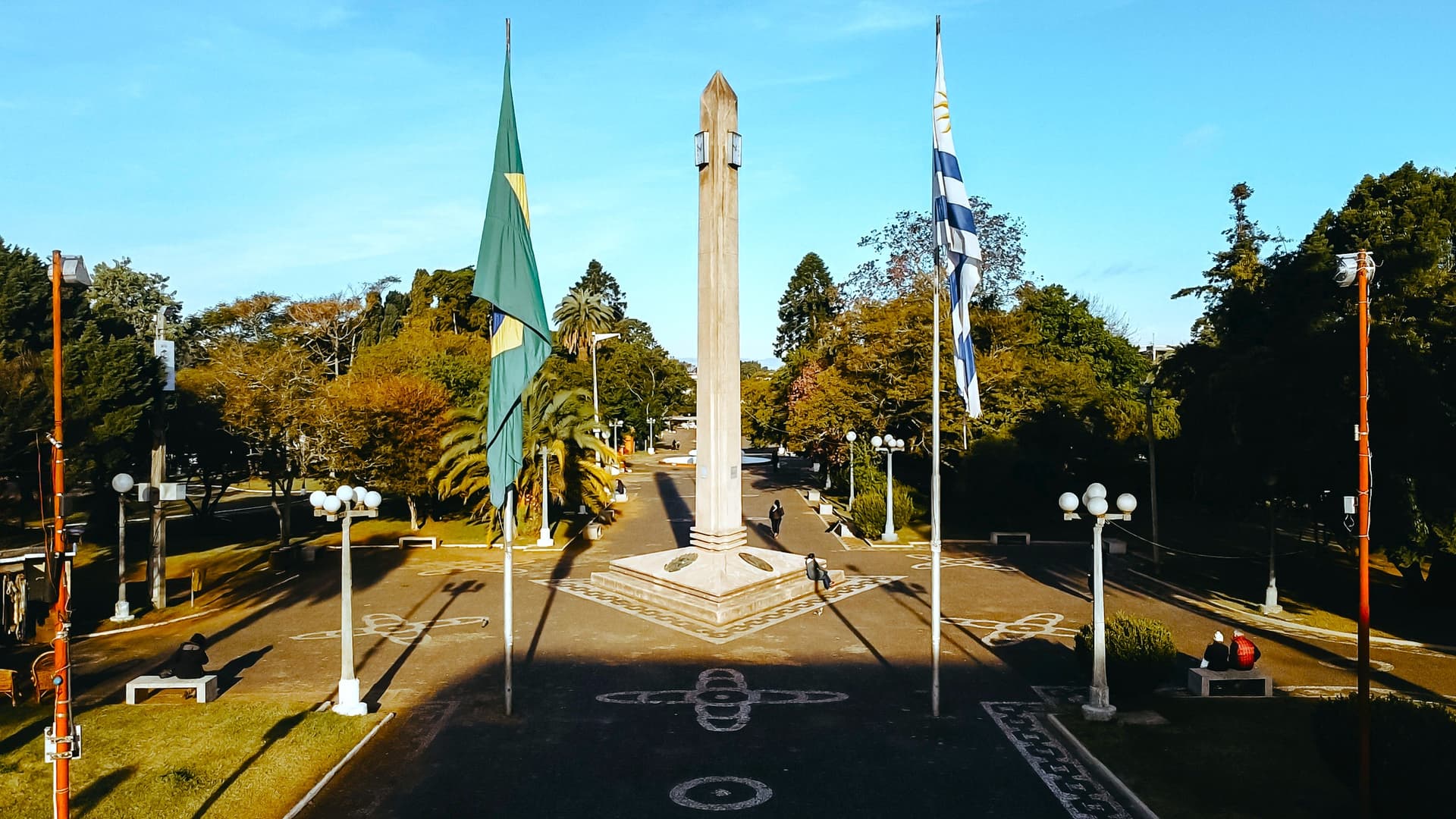
The heart of Rivera revolves around the Plaza Internacional, a green space symbolically shared between the two countries. The commercial streets of the free trade zone attract Uruguayan and Brazilian shoppers for electronics, perfumes, and clothing. The architecture blends Uruguayan colonial constructions and Brazilian buildings without marked transition.
History and Context
Rivera owes its name to General Fructuoso Rivera, the first president of Uruguay. The city developed in the nineteenth century as a strategic border post. The dry border with Brazil — without a river or natural relief — shaped a unique hybrid identity in South America, where inhabitants move freely from one country to the other in their daily lives.
Highlights of a Visit
Plaza Internacional
This central square materializes the border through a simple change in paving. You can cross from one country to the other in just a few steps, without any controls. It is the living symbol of integration between the two cities.
The Free Trade Zone and Border Commerce
Rivera is home to one of Uruguay's most active free trade zones. Duty-free shops line the main avenues and attract a regional clientele. The atmosphere is lively, blending Uruguayan sellers and Brazilian shoppers in a permanent commercial dance.
Parque Gran Bretaña
This urban park offers a green space valued by residents. It provides a pleasant pause between two commercial districts, with shaded paths suited to a leisurely stroll.
Photography Tips
The Plaza Internacional photographs well in the morning, before the commercial rush. Frame the bilingual signs and flags of both countries to illustrate the duality of the place. The busy commercial streets offer good scenes of daily life in late afternoon.
Location and Access
Rivera is located at the far north of Uruguay, on the border with the Brazilian state of Rio Grande do Sul. The bus station receives buses from Montevideo and Tacuarembó. On the Brazilian side, Santana do Livramento is accessible on foot from downtown Rivera. The local airport provides a few Uruguayan domestic connections.
Nearby
- Tacuarembó — town south of Rivera, considered the cultural capital of Uruguayan tango and gaucho folklore.
- Valle Edén — natural site near Tacuarembó, associated with the legend of Carlos Gardel according to local tradition.
- Lago artificial de Rivera — reservoir on the outskirts of the city, frequented for fishing and walks.
Frequently asked questions
Nationals of many countries can move freely in the immediate border zone without formality. To venture beyond Santana do Livramento, Brazil's entry requirements apply. Check the requirements for your nationality before departure.
Rivera can be visited year-round. The Southern Hemisphere spring (September-November) and autumn (March-May) offer pleasant temperatures. Summer can be hot in this northern Uruguayan region.
Border zone shops on the Brazilian side often accept the Uruguayan peso, but the exchange rate applied varies by store. It is better to have reais for purchases on the Brazilian side.
Several bus companies provide service from Montevideo's terminal. The journey takes approximately six hours. There are also domestic flights depending on the season, but availability is limited.
Rivera combines well with Tacuarembó to the south, which offers complementary cultural interest. The two cities form a coherent loop in northern Uruguay, to be integrated into a wider circuit of the country.