Rocha and the Northeastern Lagoons
At the eastern tip of Uruguay, Rocha lines UNESCO-listed lagoons, unpaved coastal villages, southern right whales from July to October and 220 bird species.
Rocha is the easternmost department of Uruguay, wedged between the Atlantic Ocean to the south, the Brazilian border to the northeast and inland wetlands descending from the Bañados del Este. Our team takes travellers here who seek a different Uruguay from Punta del Este: here, roads cross butiá palm groves, shifting dunes, ombú and coronilla forests, and open onto brackish lagoons intermittently connected to the ocean. The department covers roughly 11,000 km² for barely 70,000 inhabitants, which explains the sense of space you feel the moment you leave Route 9.
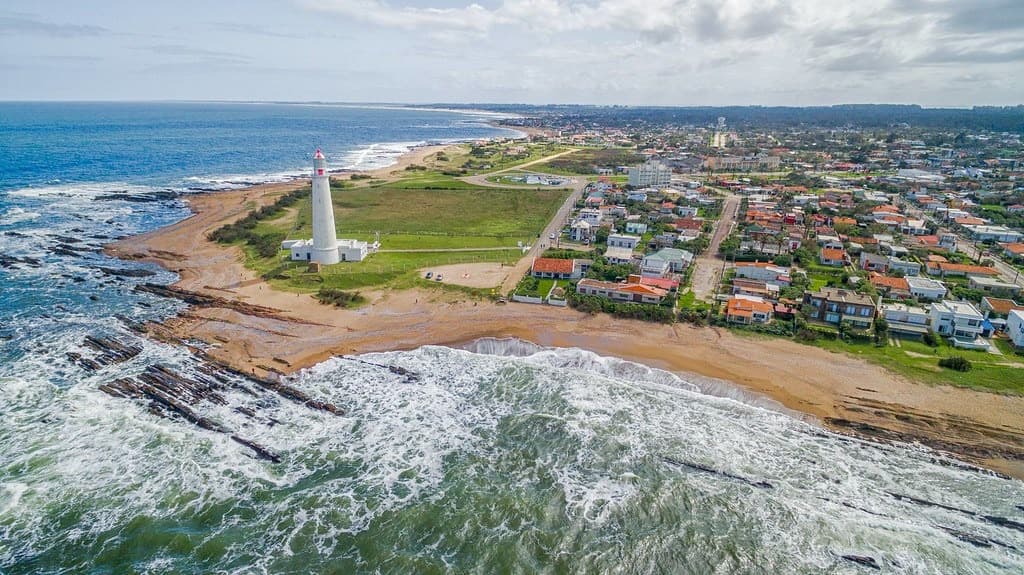
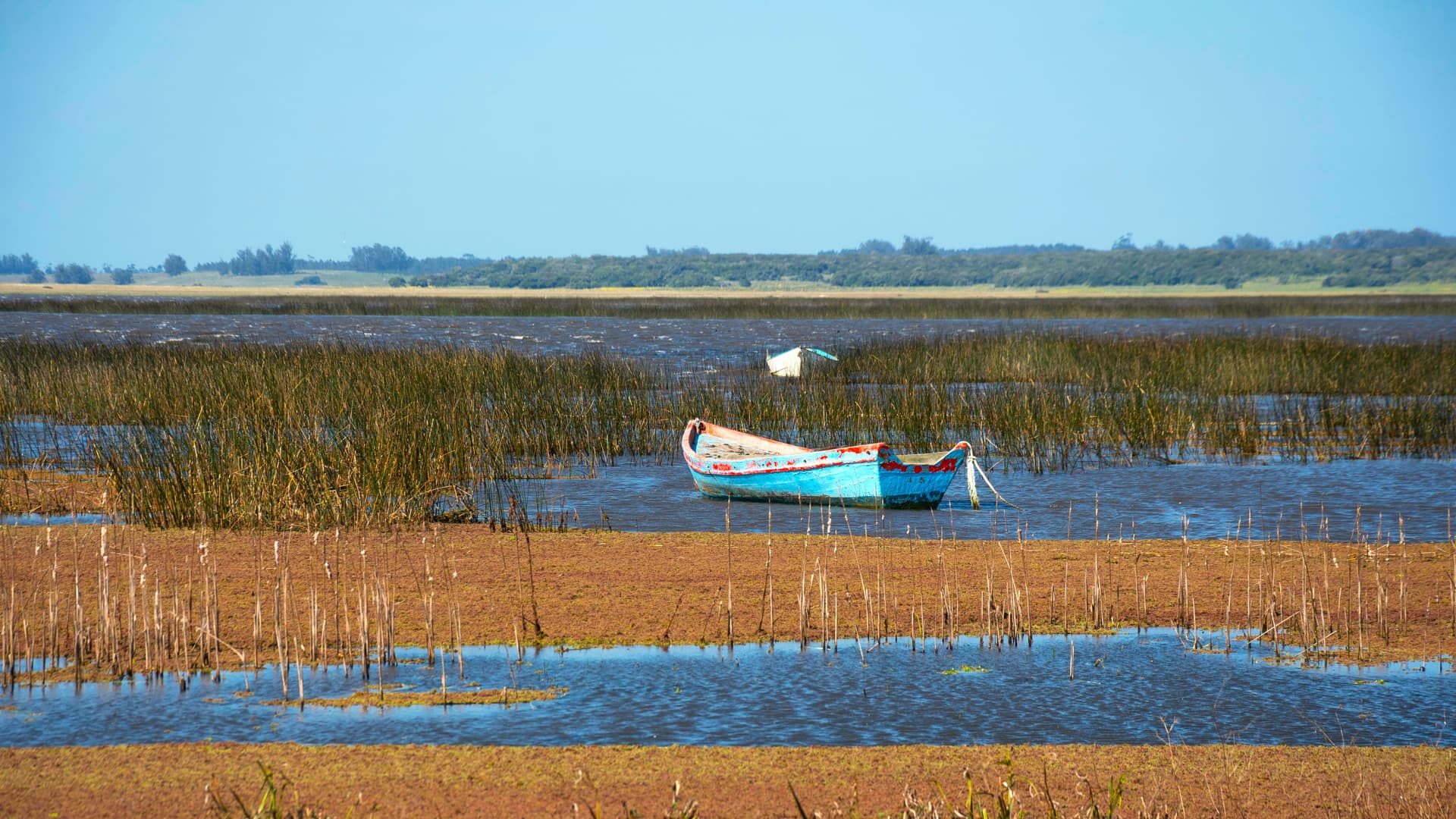
The geography is legible here: a sandy coastal plain of 180 km, dotted with rocky headlands like Cabo Polonio and Cabo Santa María (where the La Paloma lighthouse has stood since 1874), and a hinterland of shallow lagoons. Laguna de Castillos, Laguna de Rocha and Laguna Negra are the three most important. All three have been designated a UNESCO Biosphere Reserve since 1976 under the name Bañados del Este. Laguna de Rocha opens and closes to the ocean depending on storms and flooding: this rhythm maintains its variable salinity and nourishes its shrimp populations, the basis of local artisanal fishing.
The climate is temperate oceanic. Summers (December to March) hover around 25 to 28 °C during the day, with cool nights due to the southern wind, the pampero, which can drop temperatures by 10 °C in a few hours. Winters (June to August) drop to 8-12 °C with persistent drizzle. This humidity explains the richness of the ecosystems: the bañados are flood-prone zones that harbour capybaras, neotropical otters, broad-snouted caimans (yacaré overo) and over 220 recorded bird species, including Chilean flamingos and black-necked swans that winter on the lagoons.
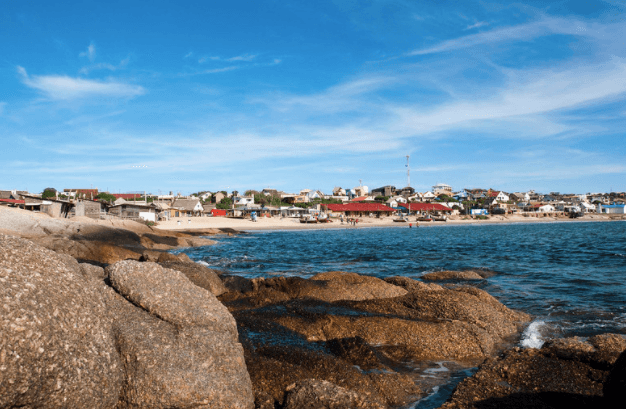
As for villages, Cabo Polonio remains the most singular: no paved roads, no public electricity, access only by 4x4 through 7 km of dunes from Route 10. About fifty permanent residents live here around the lighthouse, among the second-largest sea lion colony in South America (roughly 3,000 individuals). Punta del Diablo, further north, is a former shark-fishing village that has become a base for visiting National Park Santa Teresa. La Pedrera and Aguas Dulces remain modest in scale off-season. Further inland, Castillos and Chuy (on the Brazilian border) are service towns.
Local culture is rooted in artisanal fishing, extensive livestock farming and the harvest of butiá, the small orange fruit of the Butia capitata palm from which a very traditional licor de butiá is distilled, especially during February and March celebrations. In Castillos, the COPAYSER cooperative brings together producers and offers tastings. At the table, chivitos give way to grilled brótola, cazón empanadas (small shark) and corvinas caught that very morning. National Park Santa Teresa, created in 1927 around an 18th-century Portuguese fortress, adds a historical dimension: its 3,000 hectares of planted forest, rose garden and beaches allow for a full visit in half a day.
Finally, between July and October, Rocha's coast becomes one of the two best vantage points for watching southern right whales in Uruguay, along with Maldonado. From the cliffs of La Coronilla or Punta del Diablo, you can see them with the naked eye 200-500 metres offshore, migrating between breeding grounds at Península Valdés and Antarctic waters. It is for this rare combination—marine fauna, brackish lagoons, coastal forests and unpaved villages—that we consider Rocha the most singular region of the Uruguayan coast.
To Discover
Cabo Polonio without electricity. Access by 4x4 through the dunes from Route 10, candlelit nights in a cabin facing the ocean, and at dawn observation of the 3,000-strong sea lion colony from the rocks around the lighthouse.
Laguna de Castillos by boat. Navigation from Monte de Ombúes through the densest ombú forest in South America, tree-shrubs 300 years old whose spongy trunks float at the surface of flooded soils.
Southern right whales. Between July and October, viewing from the cliffs of La Coronilla and Punta del Diablo. Females approach 200-500 metres from shore with their calves, visible without a boat.
National Park Santa Teresa. Portuguese fortress begun in 1762, completed by the Spanish, set on a wooded hill 3 km from deserted beaches. Rose garden in bloom from October to December, capybaras roaming free year-round.
Artisanal fishing at Laguna de Rocha. Early morning trip with the fishermen of La Paloma to collect shrimp nets, then tasting on land in the wooden ranchos of the fishing village.
When to Go
The best window depends on what you're seeking. For marine wildlife and tranquility, we recommend September to mid-November: temperatures of 15 to 22 °C, whales still present until late October, migratory birds on the lagoons, and villages nearly empty. Uruguayan summer (mid-December to end February) offers 25 to 28 °C and seas at 20-22 °C, but La Pedrera, Punta del Diablo and Cabo Polonio fill up heavily between 28 December and 15 January, a period we avoid for travellers seeking space. March remains very pleasant, water still warm, visitor numbers drop by five times.
Winter (June to August) is genuinely cool: 8 to 12 °C during the day, humid sea winds, frequent drizzle. Many lodgings in Cabo Polonio and Aguas Dulces close then. We recommend it only for travellers focused on whales and willing to stay in La Paloma or Castillos, where facilities remain open year-round. April and May are an interesting intermediate season: autumn colours on the butiá palm groves, 14 to 20 °C, and minimal traffic on Route 9.
Practical Advice
We recommend a minimum of 4 full days for Rocha, ideally 5 or 6. The distance between Montevideo and Punta del Diablo is 310 km via Route 9, approximately 3.5 hours' drive. Within the department, sites are spread out: allow 1 hour between La Paloma and Cabo Polonio, 45 minutes between Cabo Polonio and Punta del Diablo, 30 minutes between Punta del Diablo and Santa Teresa. The entry airport is Montevideo (Carrasco), and a rental car remains the easiest way. We also arrange private transfers for travellers who prefer not to drive.
Rocha combines naturally with the Atlantic Coast (José Ignacio, La Barra) coming from the west, or with the Gaucho Hinterland via Route 8 and the estancias of Cerro Largo heading north. A 12-day loop Montevideo, Colonia, gaucho country, Rocha works well. Comfort varies: well-appointed rural posadas around Laguna de Castillos and La Paloma, more rustic cabañas at Cabo Polonio (sometimes without reliable hot water), boutique hotels in Punta del Diablo. The region is particularly suited to contemplative travellers, birdwatchers, couples seeking deserted beaches and families with children from 7-8 years old, capable of walking in the dunes and tolerating 4x4 journeys.