Colonia and the Rio de la Plata
Portuguese town from 1680 facing Buenos Aires, UNESCO cobblestones and Tannat estates in Carmelo: a river and wine gateway into Uruguay.
Colonia del Sacramento sits on a low promontory on the northern shore of the Rio de la Plata, 177 km west of Montevideo and 50 km across the river from Buenos Aires. Our agency regularly sends travelers here as a first or final Uruguayan stop, often in connection with flights via Argentina: the Buquebus ferry connects central Buenos Aires to Colonia's port in 1 hour 15 minutes, making it one of the gentlest entry points into the country.
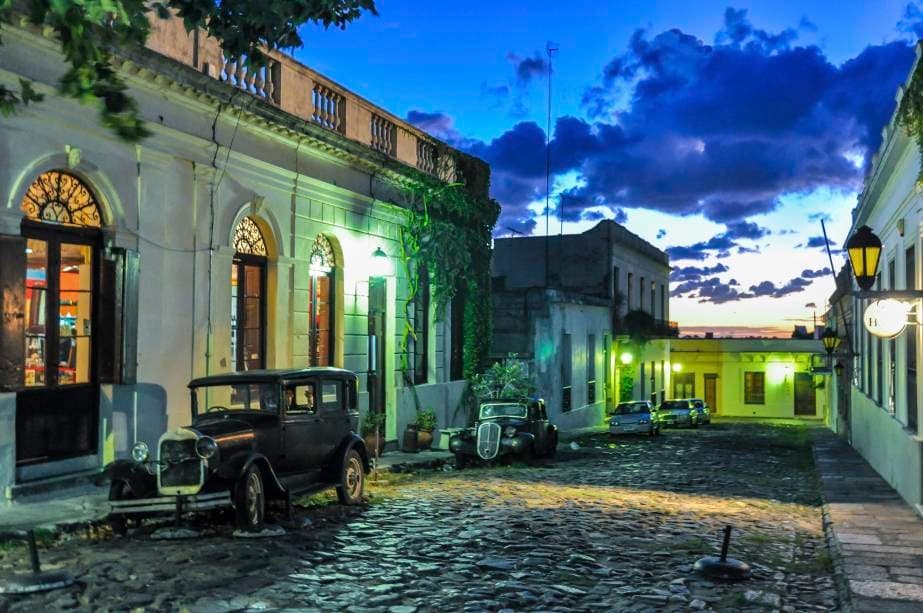
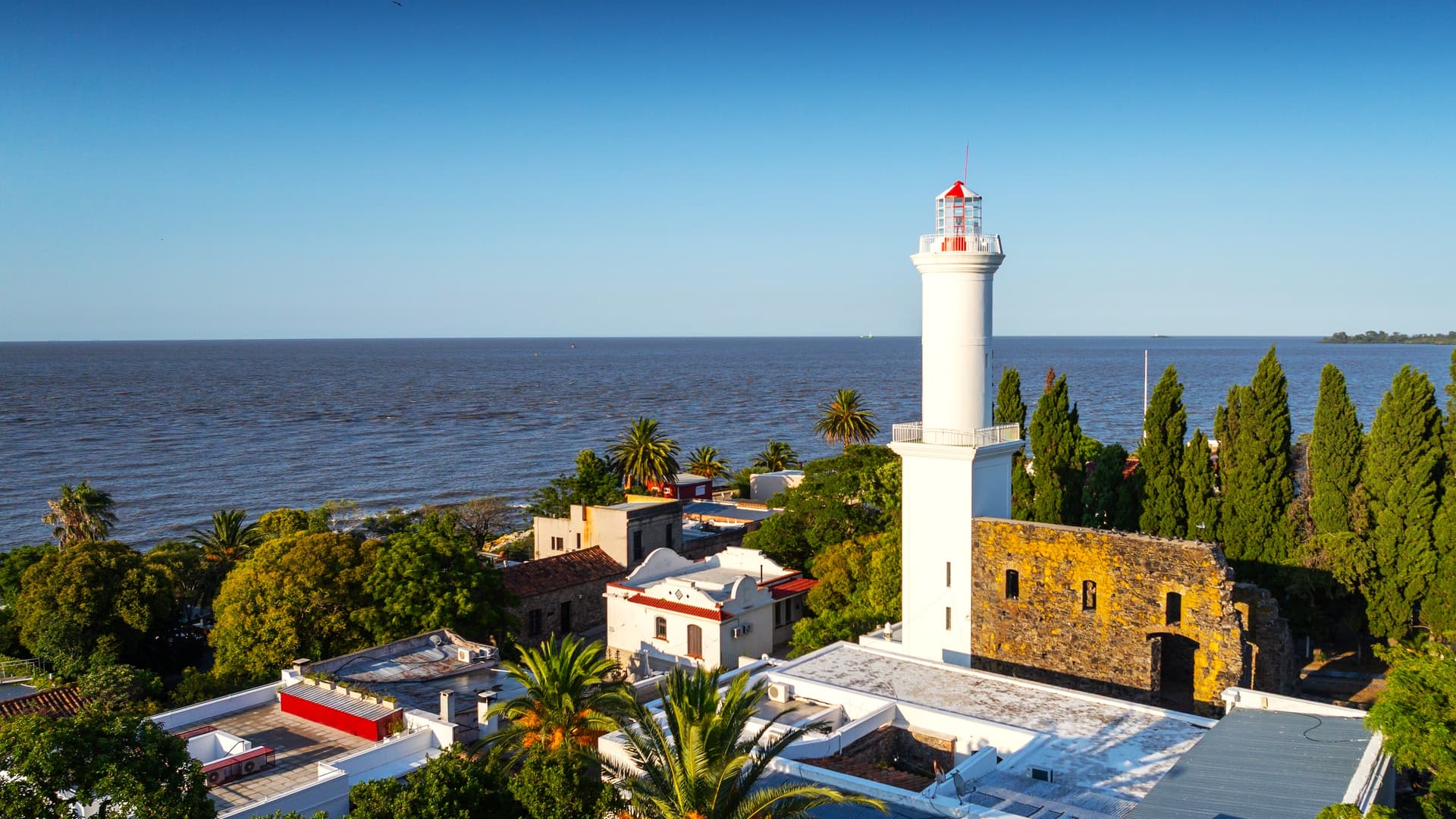
The city was founded in 1680 by Portuguese governor Manuel Lobo as a commercial beachhead opposite Spanish Buenos Aires. This strategic position meant it was captured, retaken, razed and rebuilt roughly a dozen times by Portuguese and Spanish forces until the 1777 treaty. What remains is the Barrio Histórico, designated a UNESCO World Heritage site in 1995, where the Calle de los Suspiros, paved in a gentle arch to channel rainwater toward the river, preserves the original Portuguese layout. The 1857 lighthouse, built atop the ruins of the San Francisco convent, rewards the climb of 118 steps with the finest panoramic view: terracotta tiles, fig trees, and the gray expanse of the Rio de la Plata, which looks more like a sea than a river, stretching 220 km wide at this point.
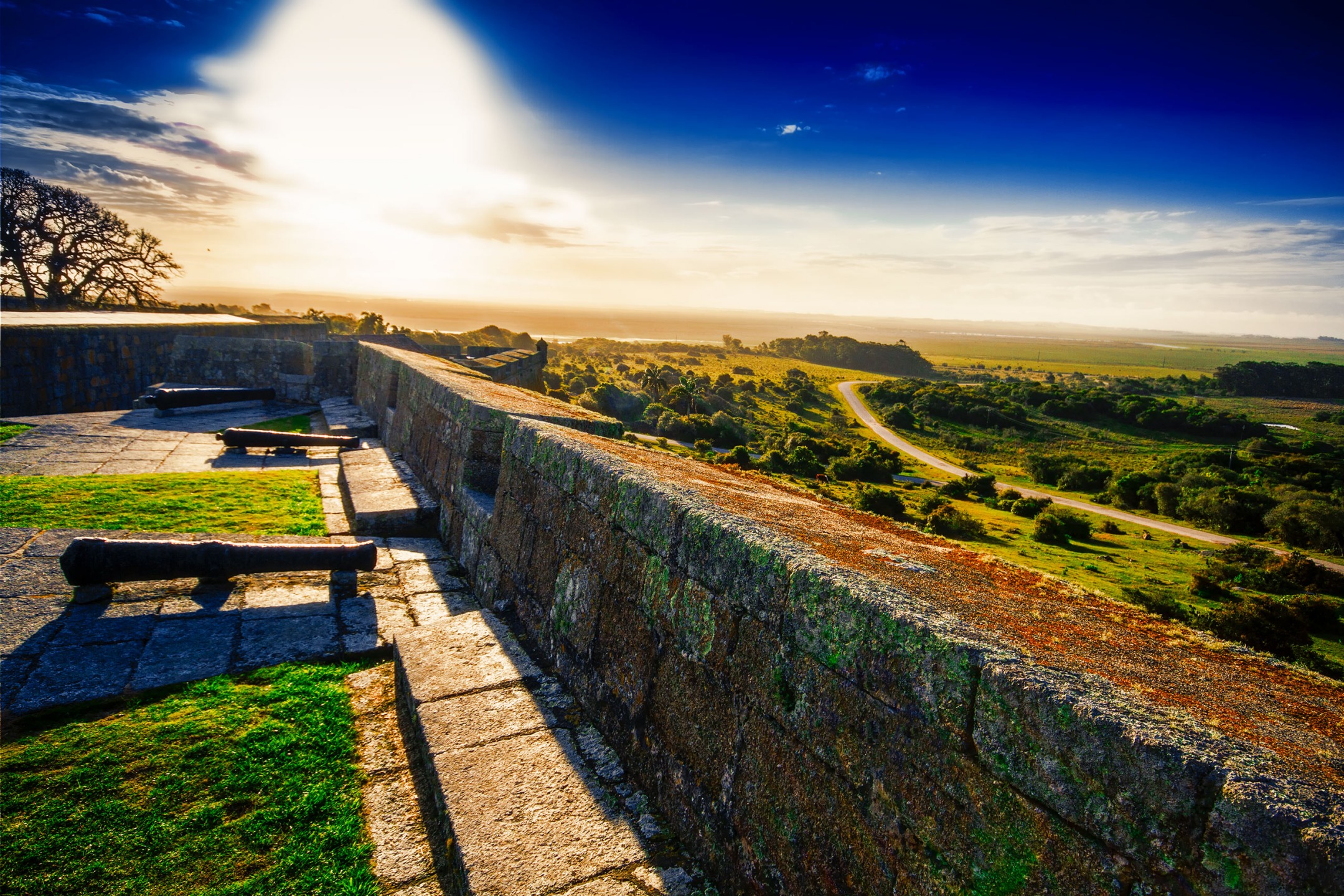
The Rio de la Plata is not blue. It carries sediment from the Paraná and Uruguay rivers, giving it a distinctive ochre hue that locals simply call color barro. It is brackish water, shallow, where sábalo and pejerrey are fished. On land, the landscape is that of the low pampas: pastures for dairy farming, eucalyptus windbreaks, white farmhouses with red roofs. The Colonia department is Uruguay's historic dairy basin, structured in the early 20th century by Swiss immigration to Nueva Helvecia (founded in 1862) and Piedmontese settlers in Colonia Valdense. The region still produces Colonia cheese, a semi-firm variety often enjoyed with local quince paste.
Further north, along Route 21 following the river, Carmelo lies an hour's drive away. It is our favorite stop for those wishing to look beyond Colonia's postcard views. Carmelo developed around river commerce and the delta of the Río de las Vacas. The region concentrates around a dozen family wineries: Narbona, El Legado, Cordano, Almacén de la Capilla. The signature grape is Tannat, brought from southwestern France by Pascual Harriague in 1870, yielding wines here that are softer than those of Madiran thanks to the temperate oceanic climate. Many estates open their tables to visitors by reservation, offering wine and cheese pairings from the region.
Between Colonia and Carmelo, two detours merit the time. Conchillas, an old mining village built by the English in 1887 to extract sand and granite, preserves its brick houses and the Evans general store, a period grocer still operating today. Real de San Carlos, 5 km north of Colonia, contains the ruins of a bullring built in 1910 by Argentine entrepreneur Mihanovich, closed three years later when Uruguay banned bullfighting in 1912. These Portuguese, Spanish, British and Italian layers give the region a more mixed character than one might imagine.
Local life moves at an agricultural province's pace. The almacenes de ramos generales, those village grocery-bars, still serve mate in the late afternoon. On Colonia's port, fishermen bring in their catch at sunset, which on clear days between April and September silhouettes the towers of Buenos Aires on the horizon.
To Discover
Barrio Histórico de Colonia at dusk. After 6 p.m., the day's Argentine ferries have departed. The cobblestones of Calle de los Suspiros, the bougainvillea and single-story facades empty out. We recommend staying overnight to capture this hour.
Carmelo wineries and local Tannat. Visit and tastings at Narbona or El Legado, an hour north of Colonia. Uruguayan Tannat, rounder than its Madiran cousin, pairs well with Nueva Helvecia cheeses.
River crossing from Buenos Aires. Buquebus connects Puerto Madero to Colonia's port in 1 hour 15 minutes. An arrival by river that restores the historical sense of a town conceived as a maritime gateway.
Conchillas, an Anglo-Uruguayan village. Founded in 1887 by the British C.H. Walker company 40 km north of Colonia, this village preserves its brick houses, Protestant cemetery and a period general store.
Colonia Lighthouse, 360° views. 118 steps above the ruins of the 1696 San Francisco convent. On clear days, you can make out Buenos Aires' skyline across the river.
When to Visit
The region's climate is temperate oceanic, with no marked dry season. We recommend the window from October to April, corresponding to austral spring and summer, with daytime temperatures between 22 and 30°C and mild evenings suited to al fresco dining in the Barrio Histórico. December, January and February concentrate Argentine visitors, especially weekends; for Colonia town itself, aim for mid-week stays or outside Argentine school holidays.
May through September remains viable but calls for a different approach. Temperatures drop between 8 and 16°C, south winds (the sudestada) can blow for several days on end and rainfall averages 80 to 100 mm monthly. It is also low season for Carmelo's wineries, some of which close tastings and receive visitors by appointment only. In exchange, you have the historic quarter largely to yourself and very beautiful winter light over the river.
Practical Advice
Two nights suffice to do the region justice: one in Colonia itself, to enjoy the Barrio Histórico once day-trippers have left, and one in Carmelo, in a winery lodge or posada near the river. Allow a half-day for the historic quarter on foot, a full day for Route 21 to Carmelo with stops at Conchillas and two wineries. Access is either by car from Montevideo (2.5 hours via Route 1) or by ferry from Buenos Aires (1 hour 15 minutes to Colonia's port).
The region pairs naturally with Montevideo and the south, just two and a half hours' drive away, and with the gaucho interior for those wishing to extend to an estancia in the Florida or Durazno departments. Comfort levels are high: charming posadas in colonial homes, wine lodges with pools, refined dining. This stage suits contemplative travelers, couples, wine and urban history enthusiasts well. It is less suited to those seeking hiking or vast natural spaces, better reserved for Rocha or the Atlantic coast.