Aarón de Anchorena National Park
Aarón de Anchorena National Park
Located 35 km from Colonia del Sacramento, Anchorena Park brings together an arboretum, introduced wildlife, a presidential palace and a 75-meter lighthouse tower, accessible only by guided bus tour.
About 208 km from Montevideo and 35 km northwest of Colonia del Sacramento, Aarón de Anchorena National Park is an estate spanning over 1,300 hectares that combines an arboretum, introduced wildlife, architectural heritage, and a presidential retreat residence. On the banks of the Río de la Plata, it can only be visited by accompanied bus, several days per week, by reservation.
Why visit Anchorena Park
The site brings together several interests rarely found in a single Uruguayan park. It is one of the country's largest arboretums, featuring tree species brought back by its founder from his travels across the globe. It is also a place of memory: a presidential retreat, a riverside lighthouse tower, the founder's burial site. Finally, the introduced wildlife—capybaras, axis deer, birds—can be observed from the tour bus.
- Over 200 tree species from five continents
- Over 75 bird species recorded
- A 75-meter lighthouse tower with views over the Río de la Plata
- A 1911 palace still used by the Uruguayan presidency
- A structured guided tour format, with four thematic stops
The history of the estate
The park owes its existence to Argentine aristocrat Aarón de Anchorena. In 1907, he crossed the Río de la Plata by hot-air balloon with his friend Jorge Newbery, a pioneering flight that took him over the mouth of the río San Juan. Captivated by the region, he purchased land there to develop a project that was agricultural, ecological, and architectural in scope.
A tireless traveler, Anchorena explored Europe and Asia aboard his ship "El Pampa" and brought back plant species that he acclimated on site. Over 200 species from five continents took root on the estate, making this park one of Uruguay's largest arboretums. As for wildlife, he introduced axis deer and wild boar, which became permanently established; other species such as buffalo and kangaroos disappeared over time.
The site also bears an earlier mark: in 1527, explorer Sebastián Gaboto established a brief Spanish colony there. In his honor, Anchorena had the Torre de Gaboto erected, a 75-meter stone lighthouse overlooking the river.
Anchorena passed away in 1965 and bequeathed a portion of his land to the Uruguayan state. In 1968, over 1,300 hectares were transferred to Uruguay to become a park with ecological, heritage, and presidential purposes.
What to see during the visit
The visit takes place by bus, follows a circuit of about 7 kilometers, and includes four main stops.
The arboretum and the Río de la Plata shoreline
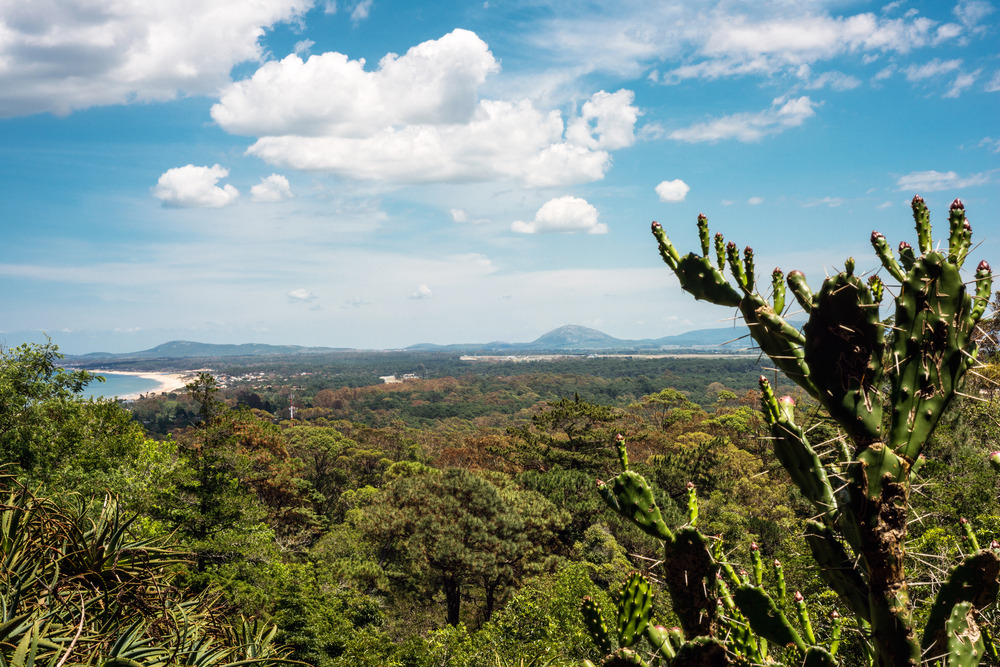
The tour begins with the arboretum, which houses over 200 Uruguayan and foreign tree species: eucalyptus, pines, oaks, araucarias, and more. Here you'll spot the first herds of axis deer, now considered invasive along with wild boar. The wildlife also includes capybaras, foxes, and a wide diversity of birds, with over 75 species recorded.
The Aarón de Anchorena Palace
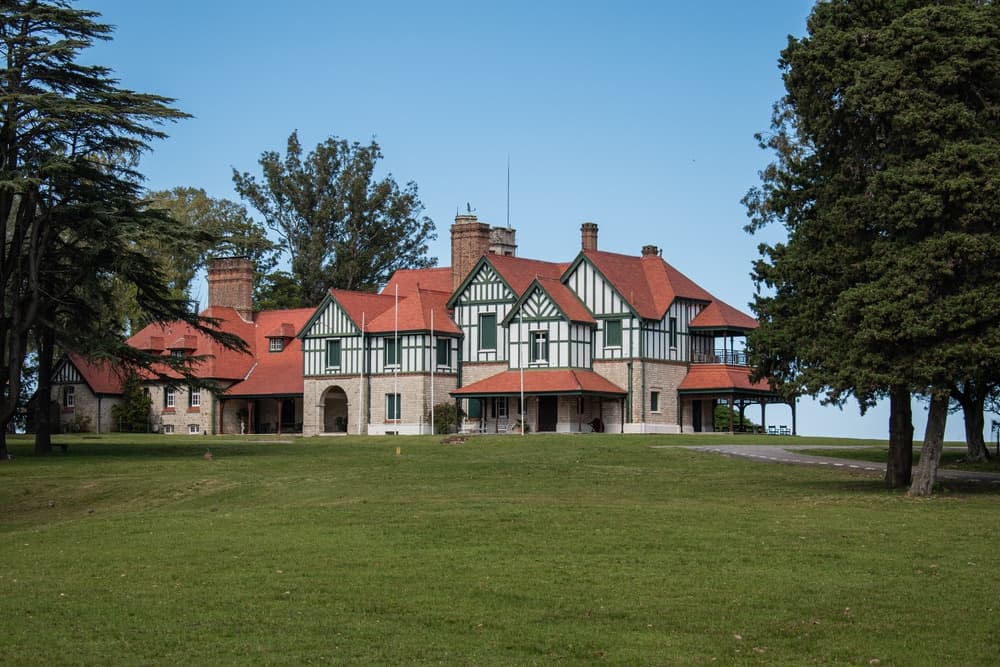
Built in 1911 on the riverbank, this presidential retreat first served as Anchorena's residence before being transferred to the state. Today, sitting Uruguayan presidents may use it as an official place of retreat. The exterior can be viewed from the bus; the interior is not open to the public.
The Gaboto Tower
Built in tribute to Sebastián Gaboto, the tower stands 75 meters tall, roughly three times the height of Colonia del Sacramento's lighthouse. On clear days, the view extends all the way to Buenos Aires across the river. The observation platforms are no longer accessible to the public, with access reserved for technical staff managing the park's water reservoir. At the base of the tower rests Aarón de Anchorena himself.
The río San Juan Jetty
The final stop on the circuit, the jetty is reached by a short walking path of about 200 meters along the río San Juan. The return to the visitor center concludes with a video presentation recounting the history and ecology of the estate.
Practical information
- Format: guided tour only, by bus (two vehicles of about 35 seats each, accommodating around 70 adults per departure).
- Days: Thursday through Sunday, two departures per day (morning and early afternoon). Exact times vary; check the official website.
- Duration: approximately two hours, over a 7 km circuit.
- Reservation: mandatory during high season, via gub.uy/presidencia/parque-anchorena.
- Fee: moderate; confirm at the time of booking.
When to visit
The park welcomes visitors year-round, but Uruguay's temperate climate makes southern spring (October-November) and southern autumn (March-April) particularly pleasant: mild temperatures, active wildlife, and arboretum in full color. Summer (December to February) can be warm and crowded; book well in advance. Winter remains accessible but daylight hours are shorter and humidity higher.
How to get there
The park is located in the Colonia department, about 35 km northwest of Colonia del Sacramento. There is no direct public transport: a personal or rental car is essential.
- From Colonia del Sacramento: 35 to 45 minutes by Route 21.
- From Montevideo: 2 to 3 hours by car.
- Final access: at kilometer 197.5 of Route 21, take the marked junction and drive about ten kilometers to the visitor center.
What to see nearby
The park pairs well with a stay in Colonia del Sacramento, a UNESCO World Heritage site, less than an hour away by car. To further explore arboretums and landscaped gardens, the Lussich Arboretum, near Punta del Este, offers another collection of acclimated species. Art and architecture enthusiasts can also visit Casapueblo or the Pablo Atchugarry Foundation, further east along the coast.
Frequently asked questions
Frequently asked questions
Yes, the visit is only by accompanied bus, with limited seating (around 70 adults per departure). Reservations are made on the official website gub.uy/presidencia/parque-anchorena, especially on weekends and during high season.
Allow approximately two hours, over a bus circuit of about 7 kilometers with four stops: the Río de la Plata shoreline, the Aarón de Anchorena Palace, the Gaboto Tower, and the río San Juan jetty.
No, free circulation is not allowed within the estate. All visitors follow the circuit by bus, except for a short walking path of about 200 meters along the río San Juan.
Yes: the bus format, without demanding hiking, suits children and people with reduced mobility. Observing wildlife (axis deer, capybaras, birds) particularly appeals to younger visitors.
No, access to the observation platforms is now reserved for technical staff managing the park's water reservoir. The tower can be admired from its base, where Aarón de Anchorena's burial site is also located.
Add Anchorena Park to your itinerary
Aarón de Anchorena National Park fits naturally into a circuit in western Uruguay, around Colonia del Sacramento and the Río de la Plata. To build a bespoke itinerary combining heritage, nature, and colonial towns, explore our Uruguay tours.
Interested in this visit?
We can include it in your personalised itinerary.