Durazno
Durazno is a city located in the central part of Uruguay. It is known for its popular festivals and rural traditions, attracting visitors with its relaxed atmosphere and distinctive cultural identity.
Durazno is a city located in the central part of Uruguay. It is known for its popular festivals and rural traditions, attracting visitors with its relaxed atmosphere and distinctive cultural identity. During your visit, enjoy both musical events and proximity to nature. This city also serves as a convenient stopover between Montevideo, the north of the country, and inland regions. Let's explore.
History
The Minuanes, Charrúas, and Yaros peoples occupied the Durazno region until the 17th century. In 1702, the Battle of Yí ended their presence and paved the way for the arrival of cattle herders and laborers from neighboring regions, drawn by the leather trade. In 1821, Fructuoso Rivera founded Villa San Pedro de Durazno to protect the army and welcome Creole families. The city subsequently experienced pivotal episodes such as the "Abrazo de Monzón" in 1825 and the Battle of Carpintería in 1836, which launched the tradition of Uruguayan political parties. Thanks to livestock farming and agriculture, Durazno prospered and received city status in 1906.
Landscapes and Geography of Durazno
Durazno is the capital of its namesake department in central Uruguay. The city sits on the left bank of the Yí River, a tributary of the Río Negro, at the intersection of National Routes 5 and 14. It has approximately 35,000 inhabitants. The department spans more than 12,000 km² and is home to nearly 58,600 residents.
Plains cover much of the territory. Their fertile soils support livestock farming and forestry. The Río Negro and Yí, accompanied by numerous streams, structure the landscape. In the central zone, altitudes range from 100 to 200 meters and reach 250 meters near the Grand Durazno ridge.
To the north, three hydroelectric dams—Rincón del Bonete, Baygorria, and Palmar—feed vast reservoirs covering nearly 1,200 km². These artificial lakes transform the terrain into peninsulas and islets. Cerro Chato, at 260 meters, marks the department's highest point on the border with Treinta y Tres and Lavalleja.
What to See?
El Sauzal Beach
You can visit El Sauzal Beach, nestled on the banks of the Yí River. Since 1930, it has welcomed visitors seeking to swim, practice water sports, or simply enjoy a peaceful setting by the water.
The "33 Orientales" Campground
Just steps from the beach, you'll find the "33 Orientales" campground, a much-beloved natural space. Each year, hundreds of Uruguayan and foreign campers pitch their tents here for a few days of outdoor adventure. The facility offers all necessary services including drinking water, electricity, shops, a medical clinic, restrooms, and round-the-clock security. You can also enjoy numerous activities such as the water park, sports fields, children's play areas, and bike and canoe rentals.
Hispanidad Park
During your stay, take time to discover Hispanidad Park, on the city's outskirts. This is where the region's major events are held, including the National Folklore Festival and the gaucho gathering. You can explore artificial lakes, an arena for equestrian demonstrations, a motorbike track, and even a floating stage set on the water. The "Festival Footbridge" invites you to admire busts of renowned Uruguayan folk artists.
Sarandí Square
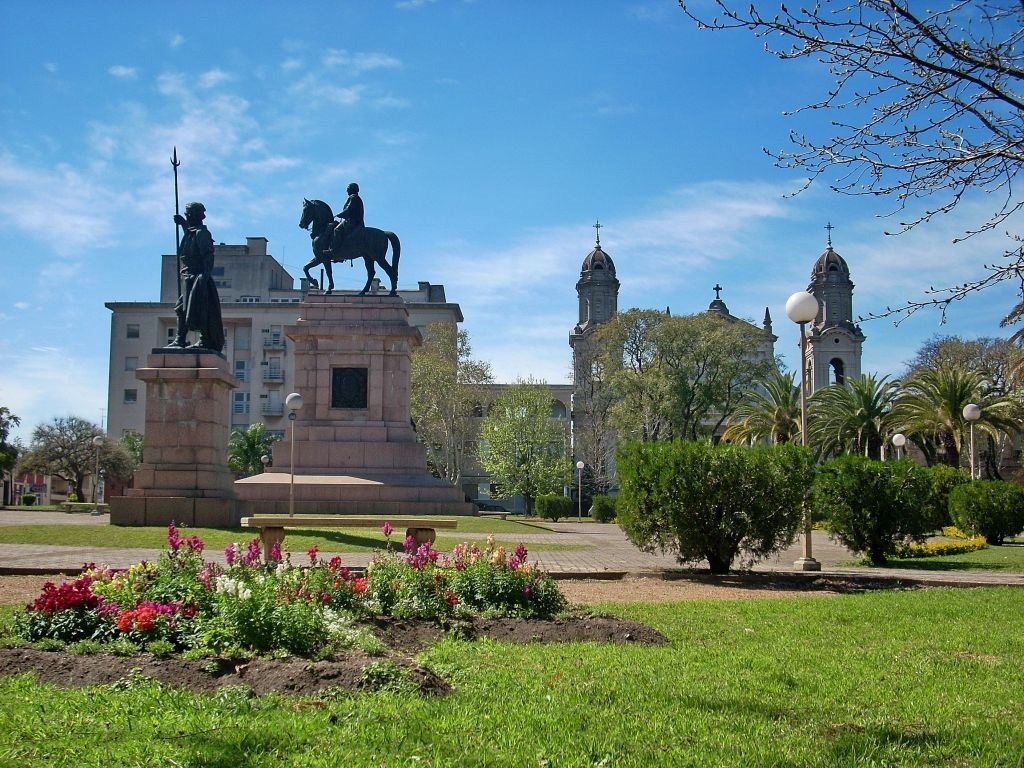
In the heart of the city, Sarandí Square offers a pleasant setting for a stroll. You'll discover an elegant pergola, a central fountain, and colorful vegetation that beautifies the entire neighborhood.
The Third Millennium Monument
At the entrance to Durazno, at the intersection of Routes 5 and 14, you can see the Third Millennium Monument. Inaugurated in 2000, it traces humanity's evolution through stone, wood, iron, aluminum, and polycarbonate. Its three luminous columns symbolize the future, imagination, and human creativity.
Farruco Chapel
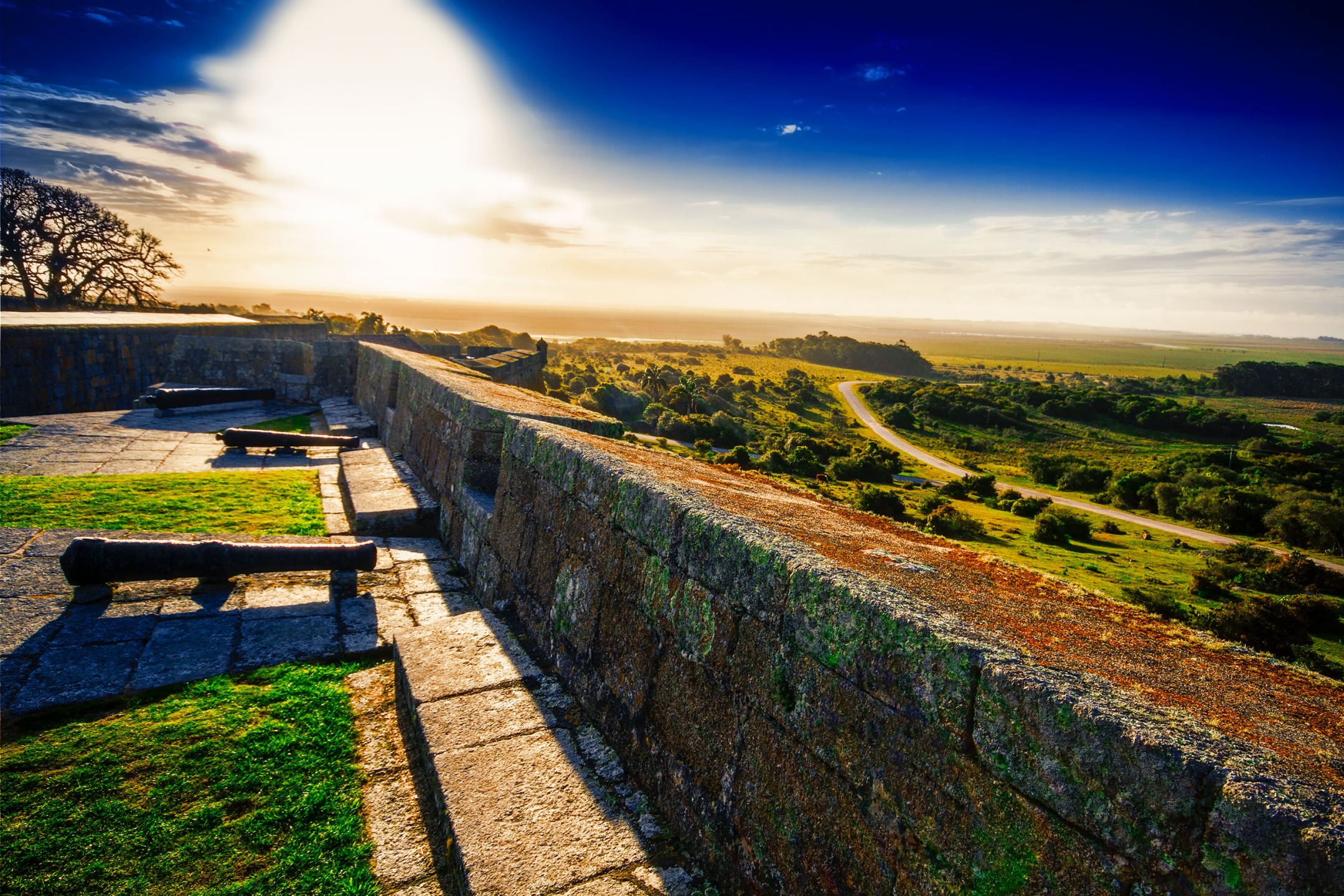
If you venture slightly beyond the city, you'll have the opportunity to visit Farruco Chapel. It stands as one of the oldest testimonies to the colonial era in the region. Each year, it hosts the international pilgrimage for the "Festival of Hispanic-Uruguayan Brotherhood."
San Pedro Church
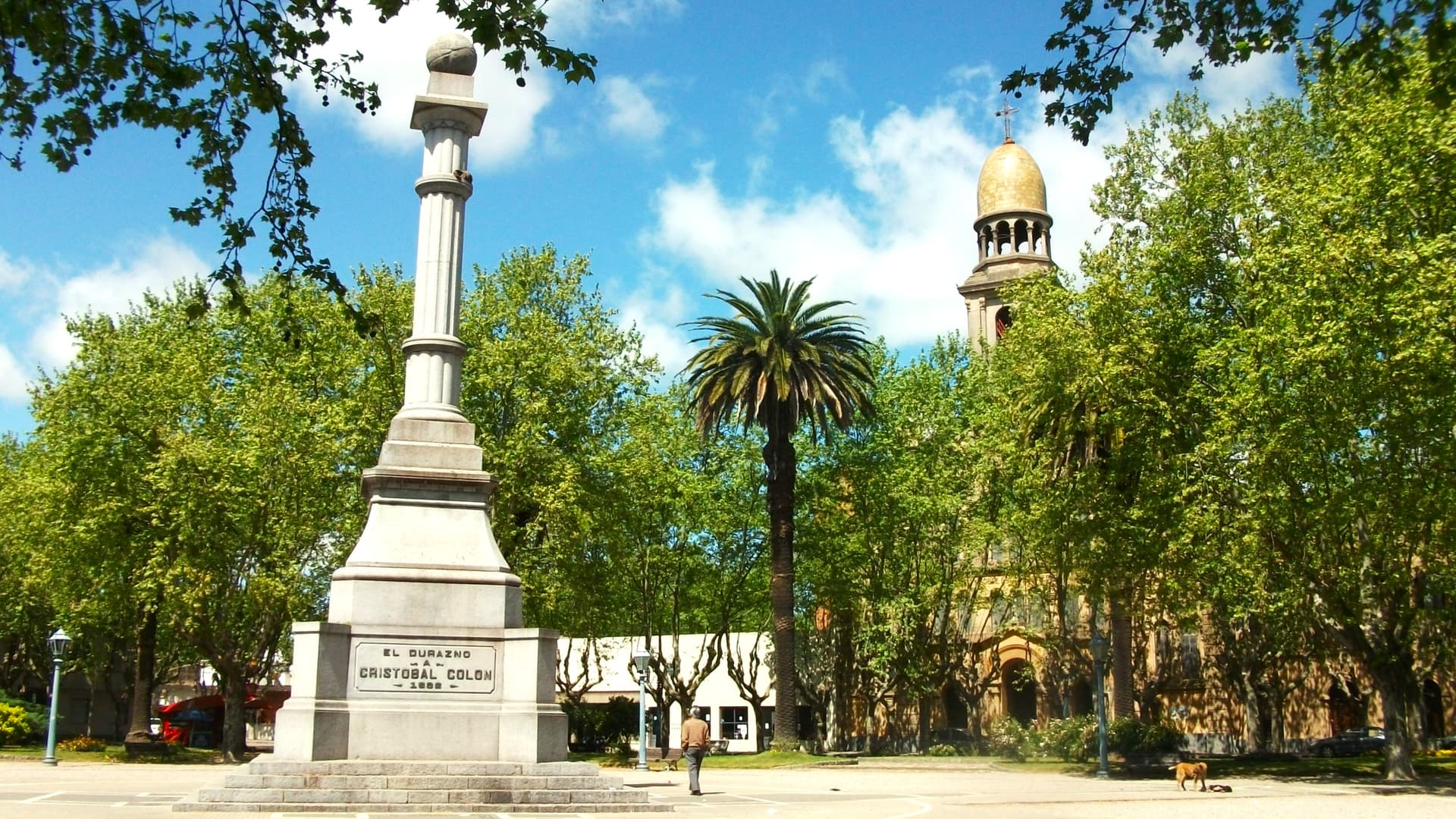
Opposite Independence Square, you can admire San Pedro Church. Following a fire, engineer Eladio Dieste rebuilt it using reinforced brick, giving it the singular architecture you see today.
Climate
Durazno features a humid subtropical climate. Winters are mild, from June to August, and summers are warm, from December to March. Rainfall is distributed throughout the year. Temperatures generally range between 6°C and 31°C, rarely falling below -1°C or exceeding 35°C.
When to Visit?
If you wish to enjoy Durazno's summer activities, plan your stay between mid-October and mid-January, or between mid-January and mid-April. These periods offer the most favorable conditions for exploring the city and its surroundings.
You can easily reach Durazno by road. National Route 5 directly connects Montevideo, Canelones, Florida, Tacuarembó, and Rivera, while National Route 14 provides access from Trinidad.
The city is also served by the Santa Bernardina international airport, which offers a practical alternative when flights to Carrasco are unavailable.
Finally, the railway line departing from Montevideo crosses through the center of Durazno and continues to Rivera, at the Brazilian border.