Artigas
Located at Brazil's border, Artigas is a gateway to a surprising and welcoming Uruguay. Far from the usual tourist trails, this city captivates with its vibrant carnival, animated daily life, and multicultural atmosphere. In the surrounding area, nature offers wonderful discoveries, from monumental rock formations to hidden vineyards. It's an ideal stop to experience the country's authenticity while enjoying a warm and hospitable atmosphere.
Located at Brazil's border, Artigas is a gateway to a surprising and welcoming Uruguay. Far from the usual tourist trails, this city captivates with its vibrant carnival, animated daily life, and multicultural atmosphere. In the surrounding area, nature offers wonderful discoveries, from monumental rock formations to hidden vineyards. It's an ideal stop to experience the country's authenticity while enjoying a warm and hospitable atmosphere.
A Brief History
The history of this city begins in 1852 when Carlos Catalá founds San Eugenio del Cuareim on the banks of the Río Cuareim, facing the military colony of San Juan Bautista, the future Brazilian city of Quaraí. The locality quickly established itself as a strategic point and became the capital of the department in 1884. In 1915, it achieved city status and took the name Artigas, in tribute to national hero José Gervasio Artigas.
Where Is Artigas Located?
When you arrive in Artigas, you find yourself in the far north of the country, at the border with Brazil. It stretches along the banks of the Río Cuareim, facing Quaraí, its Brazilian neighbor. It is located approximately 500 km from Montevideo, Buenos Aires, and Porto Alegre, and somewhat farther from Asunción.
From Artigas, you can quickly reach other localities in the department such as Baltasar Brum, Tomás Gomensoro, or Bella Unión. The closest major cities are Rivera, accessible via Brazil, and Salto, 200 km away.
Artigas: A Geographic and Cultural Crossroads
As you explore Artigas, you discover the capital of Uruguay's northernmost department. It is the city farthest from Montevideo, nearly 600 km by road. It ranks among the country's ten largest cities by population. Nestled in a meander of the Río Cuareim, it faces the Brazilian city of Quaraí, with which it shares an intense social and economic life, connected by the Concordia international bridge. Together, the two cities form a cross-border agglomeration of over 70,000 inhabitants. More broadly, the department spans nearly 12,000 km², between the Uruguay River, which marks the border with Argentina, and the Río Cuareim, which traces the border with Brazil. At its far northwest lies Bella Unión, the only Uruguayan city located at a triple border with Argentina and Brazil.
Climate
When visiting Artigas, expect a humid subtropical climate—one of the warmest in Uruguay. The average annual temperature hovers around 19°C, though summers can exceed 40°C. Rainfall is abundant, with nearly 1,500 mm per year, placing the region at the top of the country. Winter brings a marked contrast: morning frosts blanket the fields and transform the landscape.
Must-See Attractions
Plaza Batlle
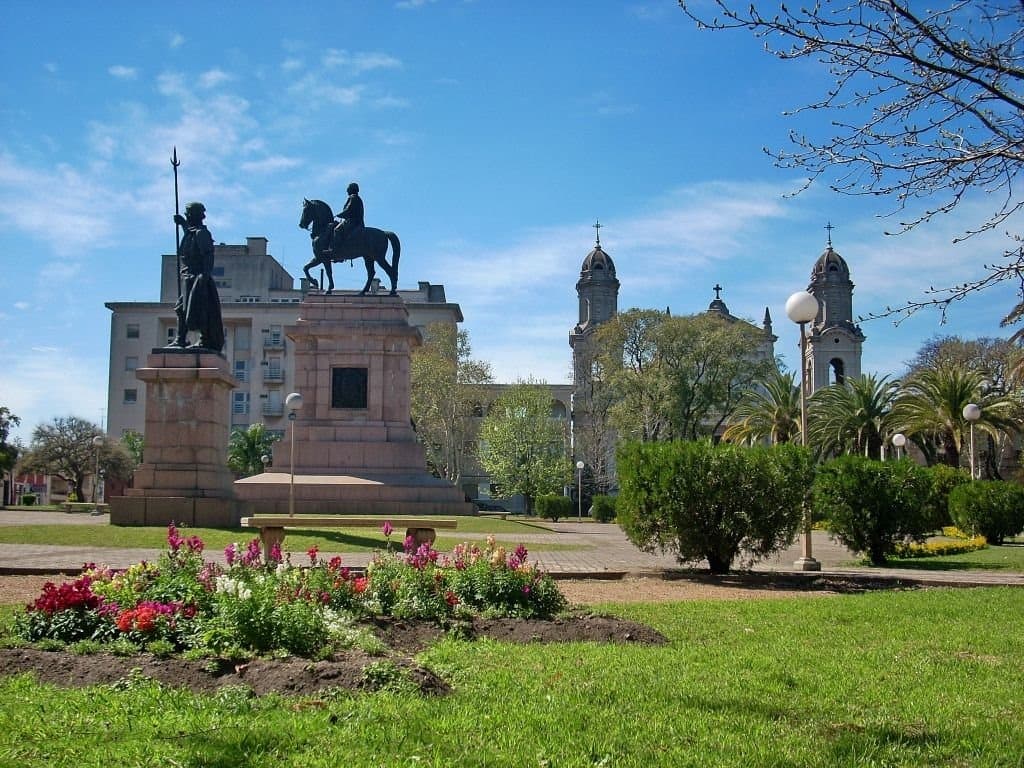
Plaza Batlle stands out as Uruguay's largest plaza. It spans two city blocks and brings together several striking symbols: the obelisk dedicated to the heroes of 1825, a monument to the Mother offered by the Lebanese community, and the great mast that dominates the esplanade. Each year, the Carnival of Artigas begins from this plaza, with its colorful procession climbing the main avenue before reaching Plaza Artigas.
Plaza Artigas
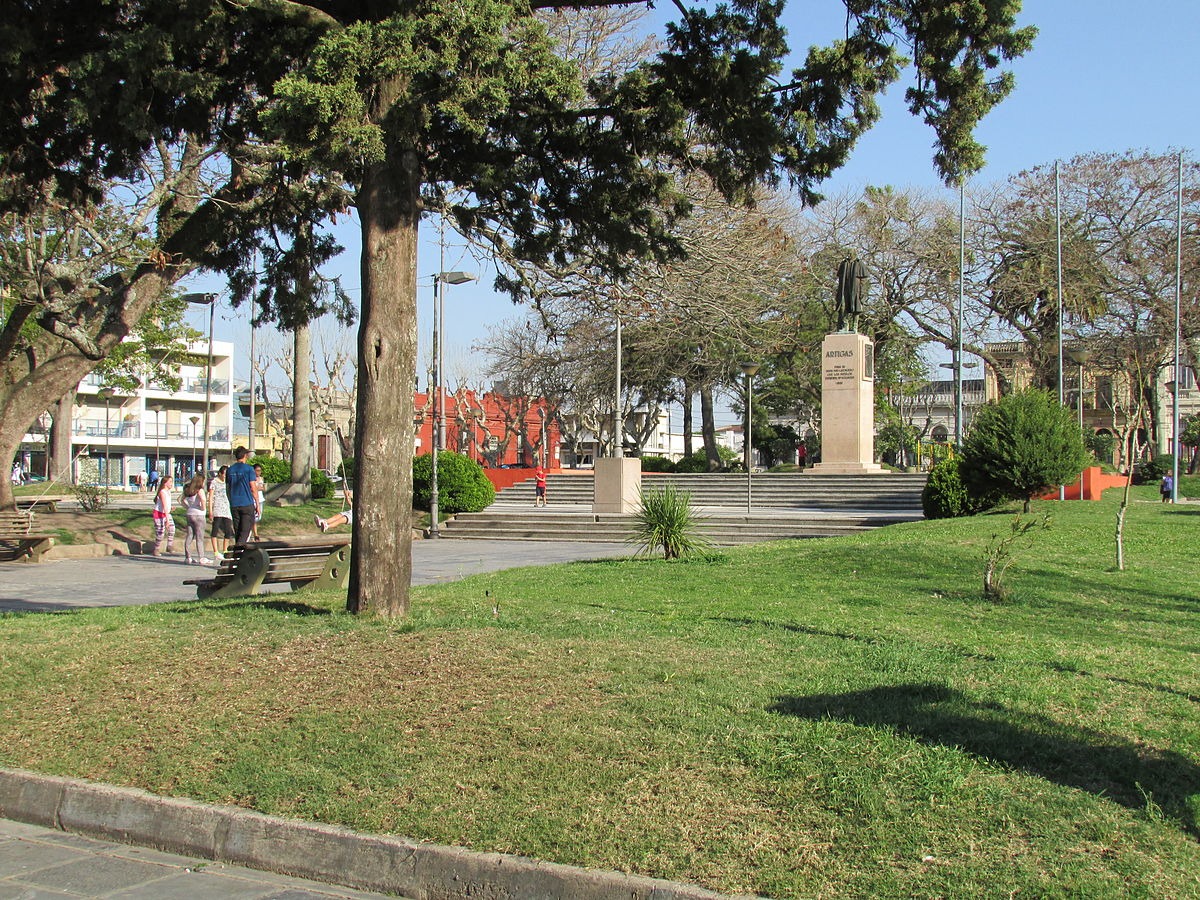
Plaza Artigas is one of the liveliest spots in the city. Surrounded by carefully maintained gardens and children's play areas, it offers an ideal setting for a break in the heart of Artigas. Here you can contemplate the bronze statue of General José Gervasio Artigas, set on a pedestal adorned with over 6,000 worked agate plaques crafted by local artisans. Don't miss the "Treasure Chest," buried in 1956 and destined to be opened in 2052.
Paseo 7 de Setiembre
Bordering the Río Cuareim, the Paseo 7 de Setiembre offers a beautiful balance between nature and modern amenities. You can admire the Concordia international bridge, stroll by the illuminated fountain, or catch a match in one of the stadiums. The site also hosts the Casa de los Deportes and a camping area. It's an ideal walk to enjoy the river, unwind, and soak in the local atmosphere.
The Ibarapitá of Artigas
Facing the bus station, discover the ibarapitá—a historic tree classified as national heritage. Introduced in 1915 by Baltasar Brum, it descends from the tree that sheltered hero Artigas during his exile in Paraguay. More than a mere landmark, it has become a symbol of memory and resistance, deeply tied to the city's identity.
Sanctuary of the Virgin of the 33 Orientals
About fifteen kilometers from the city, the Sanctuary of the Virgin of the 33 Orientals is an important pilgrimage site. Visit to admire the breathtaking views over the Cuareim valley and enjoy the tranquility that prevails at the site.
La Piedra Pintada
Just 17 km from the city, La Piedra Pintada rises as a 19-meter rock formation in the heart of a natural park. You'll find swimming pools, camping areas, walking trails, and even a small cart museum. Surrounded by native forest, this site is one of the most popular excursions for both residents and passing travelers.
Casa Tannat
Just steps from La Piedra Pintada, Casa Tannat opens the doors to a vineyard of character. You'll have the opportunity to taste remarkable Tannat wines while enjoying an exceptional panorama from the hills overlooking the region.
The Carnival of Artigas
A true highlight of the department, the Carnival of Artigas stands out for its decidedly Brazilian spirit. To the rhythm of samba, you'll witness spectacular parades where shimmering costumes and colorful floats illuminate the city. Each year, between 20,000 and 30,000 participants and spectators gather for this popular celebration.
Hot Springs
Still unexploited, the hot springs of Artigas represent a promising asset for the region's future tourism. Located in the strategic zone of the triple border between Uruguay, Brazil, and Argentina, they could become a new must-see attraction, enriching the numerous cultural and natural offerings already provided by the department.