Punta del Diablo
Punta del Diablo
A fishing village and artisan community perched on Uruguay's Atlantic coast, Punta del Diablo captivates with its wild beaches, national park, and remarkably preserved authenticity.
The coastal resort of Punta del Diablo, located in the Rocha department, sits directly on the Atlantic Ocean along Uruguay's eastern shore. This fishing and artisan village of roughly a thousand inhabitants in average season, outside peak periods, is a true slice of paradise much like Punta del Este, some 200 kilometers to the south. With temperatures hovering around 23 degrees Celsius in January dropping to around 10 degrees in July, the climate—almost Breton in character, changeable, warm, then windswept, sometimes rainy, ultimately oceanic—shapes the village's tourist seasons with considerable influence.
But make no mistake: the less forbidding weather of low season can draw plenty of travelers. High season certainly brings the most radiant climate and dreamlike settings, but the resort has become increasingly popular since the Lonely Planet travel guide ranked it in the top 10 destinations to visit in 2008, with visitors flocking here in greater numbers during December, January, and February. This small 2-kilometer-long village sees its population multiply by 30. The town benefits, however, from strict building regulations that keep it clear of large resorts and luxury high-rises, preserving a great deal of its authentic character.
A Bit of History
Punta del Diablo began to take shape in the 1930s when a family from the Rocha department arrived on this ocean coast hoping to improve their asthmatic child's quality of life. The village took time to develop, and it was slow to attract other residents or tourists. The first road connecting it to the inland territories only appeared in 1968. Before that, access was by horseback and cart, though wind would erase hoofprints and wheel tracks across the dunes.
In 1942, fishermen from Barla de Valizas to the south began taking interest in the location. They would travel up the coast to hunt sharks off Punta del Diablo's shores. Shark liver oil was highly valuable at the time, which helped put the town on the map.
Today
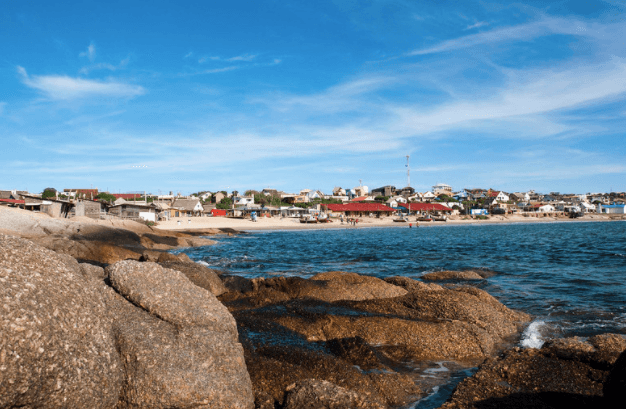
The town is now a flagship destination for South American tourism. The smooth rocks bordering sandy beaches create a sublime coastline. The relatively flat hinterland offers an evocative view of both the eastern and western horizons as you take in the region's landscape.
Following in the spirit of its recent history, it's possible to go horseback riding through forests near Punta del Este or directly on the sand. The dunes are also the setting for a rather more original activity: sandboarding—a physical activity similar to snowboarding in the mountains.
Punta del Diablo's Essential Attractions
Punta del Diablo will strike you with its picturesque character. Fishing cabins stretching as far as the eye can see, workshops of all kinds dotting a sandy-floored town center. All set against vibrant, cheerful colors that bring a smile. Various natural beaches will delight you as well, but know too that you can venture beyond town to discover the region's rich history.
Santa Teresa National Park
Situated roughly ten kilometers north of Punta del Diablo, Santa Teresa National Park is a natural landmark of the Rocha department. The site was the scene of a battle during Uruguay's war of independence. Today it stands as a sublime showcase of the country's natural diversity. More than 2 million trees have grown within these 3,000 hectares. You may also have the chance to hear or spot rare cormorants, and if you venture toward the coast, you might even catch the song of whales.
Santa Teresa Fortress
Perched on a hill at the heart of the national park stands the Santa Teresa Fortress. A building steeped in history, constructed in the late 18th century by the Portuguese on territory fiercely contested by the Spanish near what is now the Brazilian border. The two empires clashed repeatedly here, for situated between the ocean and the wetlands of Laguna Negra, it represented a strategic stronghold for controlling the eastern coast. Today it houses an impressive museum recounting this martial history and others like it—the Spanish-Creole conflicts and the civil wars following Uruguay's independence.
When to Visit?
As mentioned earlier, peak season, the most pleasant climatically, falls between December and January. The weather is dry, mild, and sunny, perfect for enjoying Punta del Diablo's beaches and enjoying leisurely vacations without worrying about tomorrow's forecast. The downside is that the village's population swells from 1,000 to 25,000 or even 30,000 simultaneously. Tourists from across South America and the world descend to spend a few days in this corner of paradise.
For this reason, it's often preferable to visit outside this window. August is rather cool here, with temperatures hovering around 12 degrees Celsius, and sees little rain. You'll need to pack a sweater, but you'll have an excellent chance of avoiding precipitation and enjoying peaceful moments throughout the village and during your visits.
Want to discover this destination?
Our local advisors design your tailor-made trip.